Tiếng Việt




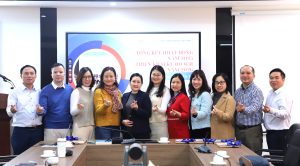
On the morning of January 8, 2026, the Editorial Board of the Vietnam Women’s Academy (VWA) Electronic Information Portal convened a working session to review communication activities conducted through the Academy’s central portal and affiliated electronic news sites in 2025. More than a routine annual review, the meeting represented a strategic opportunity to reflect on the role of digital communication in the Academy’s next phase of development.
As higher education institutions increasingly operate in a digital environment, communication has become a core component of university governance and brand-building. For the Vietnam Women’s Academy – an institution committed to gender equality, social development, and sustainable growth – its electronic information system is not merely a channel for announcements, but a strategic platform for connecting with learners, partners, and society. Against this backdrop, the meeting aimed to clarify the position and operating model of the portal system in alignment with the Academy’s Development Strategy for 2026 -2030, with a vision to 2045.
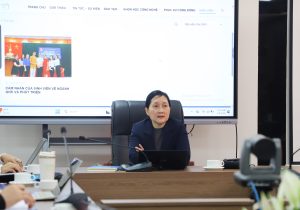
The meeting was chaired by Ms. Hà Thị Thanh Vân, Vice Director of the Academy and Head of the Editorial Board of the Electronic Information Portal, and attended by members of the Editorial Board and representatives from the eight affiliated news sites managed by faculties and institutes.
Reviewing Performance and Identifying Gaps
According to the report presented, the Vietnam Women’s Academy’s Electronic Information Portal operated stably throughout 2025, publishing more than 530 articles. These articles provided timely coverage of educational activities, scientific research, international cooperation, and student life, while ensuring full compliance with the “Three Public Disclosures” requirements applicable to higher education institutions. The central portal thus continued to fulfill its role as the Academy’s official information channel, contributing to transparency and institutional credibility in the digital space.
In contrast, the performance of the eight affiliated news sites revealed uneven development. Despite the wide range of academic programs and the high volume of teaching, research, and student activities, content output on many affiliated sites remained limited. This discrepancy highlighted a gap between the Academy’s development needs and the current effectiveness of its decentralized digital communication units, underscoring the need for renewed attention and coordinated action.
Addressing Limitations in Content and Management
During the discussion, Ms. Hà Thị Thanh Vân pointed out several recurring challenges affecting affiliated sites. These included inconsistent posting schedules, non-standardized formatting, and insufficient attention to search engine optimization, which reduces content visibility. More importantly, there is a shortage of in-depth articles that reflect academic expertise, professional analysis, and authentic voices from faculty members and students.
Another issue identified was the level of institutional awareness. In some units, website management has not been treated as a strategic responsibility. Without strong leadership direction, content development becomes fragmented, limiting the site’s ability to effectively promote academic programs and contribute to the Academy’s overall image.
These challenges are particularly significant in a context where official websites serve as key reference sources for prospective students, parents, partners, and ranking organizations. The effectiveness of the Academy’s electronic information system therefore has direct implications for public trust, institutional visibility, and national and international competitiveness.
A Strategic Shift Toward Content Governance
In line with the Academy’s Development Strategy for 2026–2030, with a vision to 2045, the Electronic Information Portal is now positioned as a strategic communication tool rather than a passive repository of information. This shift calls for a more systematic approach to content governance, emphasizing planning, coordination, and evaluation.
Key measures proposed by the Editorial Board include standardizing content and presentation criteria across the portal system, applying key performance indicators (KPIs) to assess operational effectiveness, and clearly defining the responsibilities of unit leaders in managing affiliated sites. The introduction of a minimum publication target – four articles per month for each faculty and institute – is intended to ensure continuity and relevance, rather than to encourage superficial content production.
Encouraging Diversity Within a Unified Framework
While strengthening coherence and standards, the Academy also emphasizes flexibility in implementation. Each faculty and institute is encouraged to develop content that reflects its disciplinary strengths and professional identity, while remaining aligned with the Academy’s shared orientation. Units with strong international engagement may prioritize bilingual content, while others may focus on in-depth features, expert interviews, or student-centered stories.
The Editorial Board also reaffirmed its commitment to supporting units facing resource constraints, providing professional guidance and technical assistance to enhance content quality. Importantly, faculty members and students are recognized as central contributors to enriching site content. Articles on teaching practices, research activities, learning experiences, and student initiatives help convey an authentic and dynamic picture of the Academy’s academic environment.
Advancing Transparency and Social Responsibility
Beyond institutional communication goals, the Academy’s electronic information system also serves broader social and developmental objectives. In the coming period, greater emphasis will be placed on content related to gender equality (SDG 5), quality education (SDG 4), open educational resources, data transparency, and digital connectivity with national education systems. These priorities reflect the Academy’s commitment to a modern, inclusive, and socially responsible higher education model.
Toward Collective Action in the Digital Era
The meeting concluded with a shared understanding that effective digital communication requires collective responsibility across the entire Academy. The electronic information system cannot function optimally if it is viewed as the task of a single unit alone.
The Academy’s portal system may be likened to an orchestra: the central portal serves as the conductor, guiding direction and standards, while each affiliated site represents an individual instrument contributing its unique sound. When all parts perform in harmony, the result is a coherent and powerful communication system – one capable of building trust, enhancing visibility, and strengthening the Vietnam Women’s Academy’s reputation in the digital university era.