Tiếng Việt





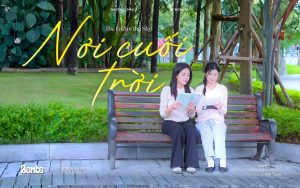
In the context of increasing international attention to socially engaged cinema, the participation and recognition of students from the Vietnam Women’s Academy (VWA) at the SineMaya Community Film Festival 2025 represents a meaningful academic and creative achievement. CanhDieuVanh Production Group, composed of students from the Multimedia Communication program, was awarded Best Community Development Film on Gender Equality, thereby affirming the role of young filmmakers in addressing pressing social issues through creative media. This accomplishment not only reflects individual artistic merit but also demonstrates the effectiveness of educational approaches that integrate professional practice with social responsibility.
The SineMaya Community Film Festival is jointly organized by the Center for Agriculture and Rural Development Mutually Reinforcing Institutions (CARD MRI) and BENTE Productions in the Philippines. As the first community film festival associated with the microfinance sector in the country, SineMaya occupies a distinctive position within the regional cinematic landscape. Its mission extends beyond film exhibition to include community empowerment, capacity building, and the amplification of marginalized voices. Since its establishment in 2022, the festival has functioned as an incubator for community-based filmmaking initiatives, offering selected participants financial assistance, professional mentorship, and practical training. This model enables emerging filmmakers—many of whom lack formal industry backgrounds—to engage with cinema in a structured, ethical, and sustainable manner.
The 2025 edition of SineMaya marked a significant expansion in both scale and scope, as the festival adopted an international format building on the success of previous years. A notable innovation was the introduction of two distinct competition categories: traditional films and animated or speculative films developed using artificial intelligence (AI) technologies. This structural development reflects contemporary trends in global cinema, particularly the growing intersection between digital innovation and narrative expression. By embracing AI-supported storytelling, SineMaya positioned itself as a forward-looking platform that acknowledges technological change while maintaining a strong commitment to community-centered narratives.
The overarching theme of SineMaya 2025, “PAMANAON: Stewards of the Future,” invited filmmakers to critically examine the concept of inheritance across generations. Participants were encouraged to explore how cultural values, social responsibilities, and environmental resources are preserved, transformed, and transmitted over time. This thematic focus underscored the ethical dimensions of filmmaking, emphasizing the responsibility of the present generation to future communities. Through this lens, cinema was framed not merely as a reflective art form, but as an active contributor to social dialogue and sustainable development. Films selected for screening addressed diverse social concerns, ranging from individual lived experiences to collective community challenges, and were presented in multiple Philippine cities prior to the official award ceremony held on 15 December 2025 at SM City San Pablo.
In alignment with its community-oriented mission, SineMaya 2025 explicitly connected its programming to several United Nations Sustainable Development Goals (SDGs), including Climate Action (SDG 13), Reduced Inequalities (SDG 10), Quality Education (SDG 4), Decent Work and Economic Growth (SDG 8), and Gender Equality (SDG 5). This alignment reflects a broader understanding of cinema as a tool for social transformation and public education. By encouraging filmmakers to engage with these global objectives, the festival reinforced the relevance of artistic practice in addressing systemic challenges and promoting inclusive development.
Within this institutional and thematic framework, the recognition of CanhDieuVanh Production Group is particularly significant. The group’s film approached the issue of gender equality through everyday narratives that emphasized emotional authenticity and social realism. Rather than adopting overtly didactic or slogan-driven messaging, the film presented nuanced portrayals of women’s experiences, highlighting subtle forms of inequality and resilience embedded in daily life. This narrative strategy fostered empathy and reflection among audiences, illustrating how personal stories can illuminate broader structural issues.
The production team comprised students from class K11-TTDPTA, including Nguyen Thao Ha (Director), Nguyen Thuy Duong (Screenwriter), Pham Thi Khanh Huyen (Production Designer), Nguyen Thi Kim Doan (Production Manager), and Nguyen Khanh Linh, under the academic supervision of M.A. Hoang Ha, Lecturer at the Faculty of Multimedia Communication. The collaborative nature of the project reflects an integrated learning process in which theoretical knowledge, technical skills, and ethical awareness were combined through hands-on practice. The students’ work demonstrates a sophisticated understanding of visual storytelling, as well as a strong commitment to social engagement.
In addition to receiving the main award, the film was shortlisted for several supplementary categories, including Best Cinematography and Best Original Score. These nominations indicate positive evaluations from an international jury regarding both artistic quality and technical execution. More importantly, they highlight the students’ capacity to engage comprehensively with the filmmaking process, from conceptual development to aesthetic realization.
The success of CanhDieuVanh Production Group also reflects the broader educational philosophy of the Vietnam Women’s Academy, which emphasizes experiential learning, interdisciplinary practice, and international engagement. By encouraging students to participate in global academic and creative platforms, the Academy fosters not only professional competence but also critical awareness of social issues such as gender equality, inclusion, and sustainable development. The students’ participation in SineMaya illustrates that multimedia communication is not solely a technical discipline, but a socially embedded practice requiring ethical reflection and cultural sensitivity.
Representatives of the SineMaya organizing committee have emphasized that the festival’s primary objective is not merely the distribution of awards, but the creation of long-term opportunities for community filmmakers to develop and sustain their voices. This philosophy resonates strongly with the approach demonstrated by the VWA students, who engaged with the festival as learners, collaborators, and socially responsible storytellers. Their participation exemplifies a model of youth creativity grounded in humility, curiosity, and a willingness to engage with diverse cultural contexts.
In conclusion, the achievement of CanhDieuVanh Production Group at the SineMaya Community Film Festival 2025 should be understood as an important milestone rather than a final endpoint. The experience provides a foundation for continued professional growth, creative experimentation, and deeper engagement with social issues. Through their work, the students have demonstrated how young creators can contribute meaningfully to their communities by producing narratives that promote gender equality, human values, and sustainable development. Such contributions underscore the transformative potential of cinema when integrated with education, ethical commitment, and community-centered practice.